
by webmanager webmanager

Understanding the Science Behind Industrial Casting

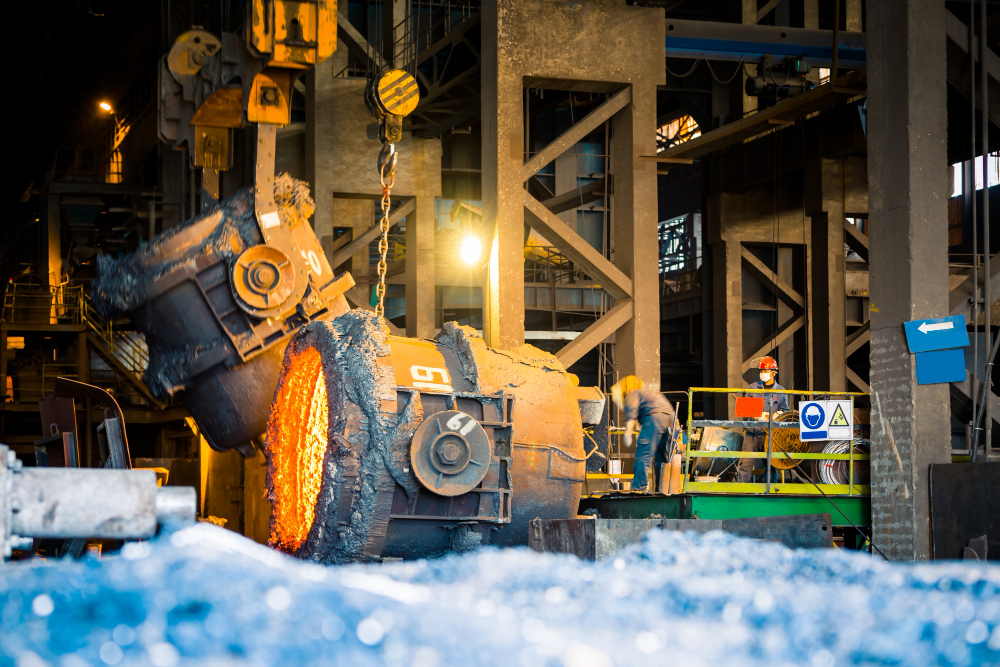
Industrial casting is sitting quietly behind many machines we depend upon day in and day out. This ranges from automotive components, which include pumps and valves, to heavy engineering parts, shaping the backbone of Indian manufacturing. On surface terms, the industrial casting process is not just about pouring molten metal into a mould; at its heart, this is applied physics and metallurgy together with years of shop-floor experience.

This helps Indian buyers make informed decisions, where durability, tolerance, and long service life are called for. Companies like Govind Steel have built their reputation by respecting both the science and the realities of Indian operating conditions.

What Industrial Casting Really Means

Industrial casting is a method of manufacturing in which liquid metal is poured or injected into the mould cavity of a pre-shaped mould and allowed to harden. The science lies in controlling how the metal flows, cools, and transforms from liquid to solid without developing internal defects.

In reality, all this is far more difficult than it sounds. Indian foundries have to contend with high ambient temperatures, humidity during monsoons, and variable power conditions. Each factor influences cooling rates, mould moisture, and metal chemistry. Ignoring these realities often leads to porosity, cracks, or dimensional issues.

Core phases of the Industrial Casting Process

  • Pattern Making and Shrinkage Control

The journey begins with a pattern, which is a replica of the final part. Patterns are intentionally oversized to account for metal shrinkage during cooling. Most metals contract as they solidify, and if not accounted for, it is a common mistake seen in low-grade casting across local markets.

A pattern adjusted by the experienced manufacturer is based on alloy behavior, section thickness, and historical data from similar jobs.

  • Moulding and Gating Design

The moulds are produced from sand, metal dyes, or other materials. Here, the gating system comes into relevance: channels, runners, and risers facilitate the easy flow of molten metal into the cavity. A good riser design feeds extra metal into the casting while it shrinks to avoid internal voids.

In most Indian industrial projects, castings fail on inspection due more to poor gating than to anything intrinsically wrong with the metal.

  • Melting, Pouring, and Fluid Behaviour

Heat the metal above its liquid temperature until it is fully molten. In pouring, fluid dynamics becomes critical: turbulent flow traps air and oxides, which weaken the casting. Skilled operators aim for smooth, controlled flow.

This stage determines whether the industrial casting process yields a sound component or scrap metal.

  • Scientific Studies on Cooling and Solidification

In the case where a metal is cooled, the main determining factor affecting the grain structure is heat transfer. A faster heat transfer process gives a finer grain structure, which is strong, and a slower process results in a coarse grain structure, which might be useful for vibrations.

Sand moulding takes longer to cool than metal moulding. On the other hand, the foundry selects options based on usage, as well as cost, rather than by habit.

  • Fettling and Post-processing

The extra metal is removed from the gates and risers after solidification. Further, the processes of cleaning, grinding, and sometimes heat treatment are carried out too. The purpose of heat treatment is to refine microstructure and enhance strength, wear resistance, or machinability.

Critical Scientific Principles that Determine Casting Quality

“Shrinkage Management” prevents internal cavities. “Directional Solidification” helps in the freezing of metal in an orderly manner. “The Control or Defects” is intended to avoid gas porosity, inclusions, and “hot tears.” “Material Science” prescribes the selection of an alloy, grey iron, or steel, or “Ductile Iron Castings” for greater strength and malleability.

The investment of a professional casting foundry is in simulation, testing, and metallurgical checks, and not in any type of guessing.

Why Material Selection Matters

There are various kinds of Indian industries, which work in a dusty, humid, or corrosive environment. The decisions in this regard are fully associated with the selection of alloys and have a direct relationship with the costs associated with life. Someone who is a longtime cast iron manufacturer would know fully where to use grey iron and where ductile iron, as well as alloy steel, should be used.

The Govind Steel performs all this in the background of automobile, infrastructure, and engineering applications by maintaining a balance between what is required and what is possible within their budgets.

Applications You Encounter in Real-Life Scenarios

Castings used in industry support pumps, gear cases, fly wheels, brake parts, and buildings. Ironically, some of the design failures can be attributed to the flawed science of casting or cuts taken during the processing of the casting.

The knowledge about the method and reason for the casting of the component may help the purchaser in avoiding problems in the future.

Selecting the Correct Casting Partner

A good foundry has nothing to say about perfection. This goes into terms of limitations, tolerances, and longevity. In India, what takes precedence over fancy talk is transparency.

Such an approach is embodied at Govind Steel, where metallurgical knowledge is supplemented by experience gained in Indian manufacturing conditions.

Conclusion

The casting process that is used in industry is a combination of experience and science,” according to one expert. As the buyer seeks to become more aware of cast steel, recognition of how various aspects of flow rates and cooling affect cast steel can increase his or her ability to ask better questions.

If you’re assessing the use of cast parts for your project in India, taking the advice of a local expert, familiar with both the metallurgical aspects as well as the realities on the ground, can be very enlightening before proceeding.

FAQs 

  • For what reasons is ductile iron preferred over grey iron? 

Ductile iron is far stronger and more flexible, and thus less prone to cracking than water meter materials.

  • In what ways is climate a factor that affects the quality of casting in India? 

High humidity and temperature have an effect on mould moisture and coupling.

  • Which industries make more use of industrial castings?

There are many industries that rely on cast parts that are applied in various sectors, including cars, infrastructure, machines, heavy engineering, and several others.
by webmanager webmanager

Importance of Dimensional Accuracy in Casting

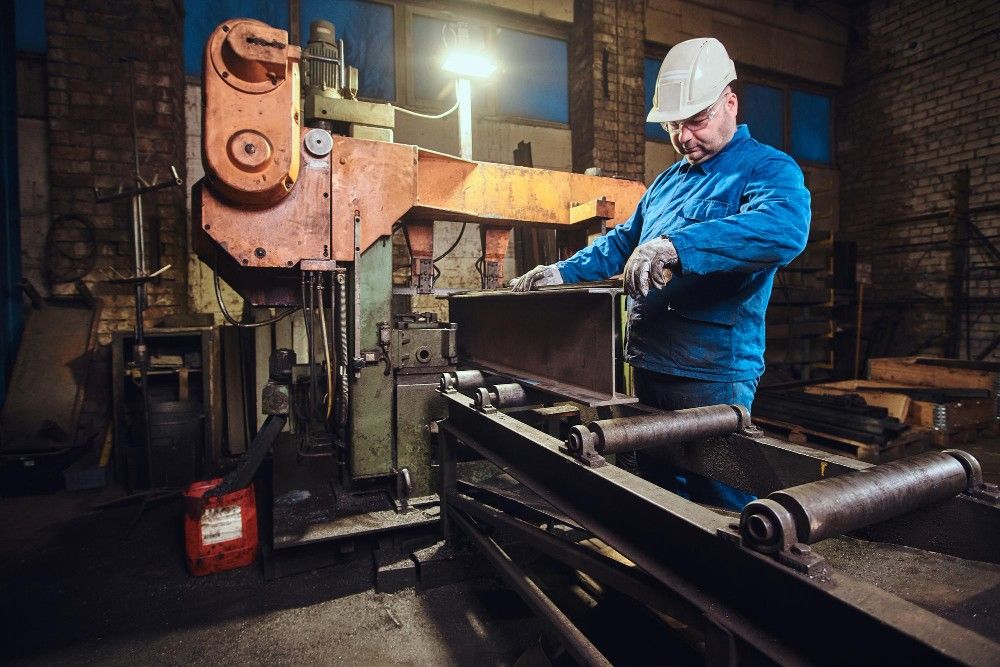
Indubitably, dimensional accuracy is the very first thing that seasoned buyers inquire when examining the casting suppliers in India. Actually, this factor substantially influences the cast whether it will be effortlessly included in the assembly or it will be the cause of postponements, reworks, and disagreements.

Accuracy for manufacturers that supply the automotive, engineering, infrastructure, and export-driven sectors is not merely a matter of choice. It is a mandate resulting from the combination of customer expectations, tolerance standards, and competitive pressure.

Dimensional accuracy is one of the main results when precision casting techniques are used by a foundry. Such a foundry minimizes deviation, elevates uniformity, and yields parts that are exactly as they are required to be under actual working conditions.

Why Dimensional Accuracy is a Necessity in Manufacturing

Casting is, in most cases, the main source of a larger production chain. Any variation at this stage will have a compounded effect downstream.

  • Assembly and Functional Fit

Bind manufacturing plants in India, assembly lines are the lifeblood of a schedule. The cast components have to be put together without forcing, shimming, or making repeated adjustments.

Correctly dimensioned parts are the main elements that make the gears work properly, ensure the housings are aligned without being under any kind of stress, and that the fasteners are fixed as they have been designed. It is usually seen in the local projects that even a very small dimensional mismatch can lead to a halt of the whole batch during trial assembly.

  • Performance and Safety Considerations

Dimensional accuracy is not only about fit. It is, in fact, the main factor that directly influences performance and safety. In the case of Ductile Iron, improper dimensions can have a serious impact on the change of the stress distribution and load paths.

In the case of automotive or heavy engineering components, such mistakes will raise the risk of fatigue and lower the service life. In the most extreme cases, the reason for the failure is not the material quality but that the tolerances were not followed.

  • Cost Reduction and Waste Control

One of the major drains of the casting manufacturing cost is secondary processing. Where accuracy is less than satisfactory, additional machining, grinding, or welding will be necessary. This will lead to an increase in labor costs as well as material wastage.

Indian foundries, which are working with a small profit margin, are well aware that higher first-time accuracy results in better profitability and faster delivery.

  • Quality and Consistency as a Business Signal

Most of the time, the dimensional accuracy is a reflection of the overall health of the entire casting process. Inaccurate dimensions usually point to the issues in pattern design, mold control, or process discipline that are deeper than that.

Buyers who are dealing with multiple foundries in India, most of the time, use the consistency of the dimensions as a criterion to shortlist their long-term suppliers.

  • Key Factors Influencing Dimensional Accuracy

The achievement of consistent accuracy is a controlled process, not a coincidence.

  • Mold and Pattern Quality

Patterns and molds are the basis of the casting dimensions. The pattern wear, the wrong draft angles, or the distortion during the handling may bring some errors, and these errors will be repeated in all batches. In India, sand molds are mostly used, and they also have certain variability. Foundries that upgrade their pattern maintenance and have well-controlled molding practices get significantly better results.

  • Shrinkage Control During Solidification

All metals shrink when they cool down. This is quite old fact, but still, it is one of the most frequent sources of dimensional errors. Very accurate shrinkage allowances have to be incorporated in the pattern design, especially for the complex Ductile Iron components. Skilled foundries set these allowances according to the thickness of the section, alloy behavior, and the cooling rate that they get from real production.

  • Process Parameters and Pattern Manufacturing

With the use of digital pattern making and additive manufacturing, parameters such as layer thickness, print speed, and temperature now have an effect on the final dimensions. If these parameters are handled in the right way, the control over the final product will be much tighter than in the case of a hand-made pattern, especially when the geometries are complex.

  • Environmental Conditions on the Shop Floor

Indian foundries are located in different climatic zones. The great humidity during the monsoon season affects the properties of the sand and the stability of the mold. The temperature changes may have the effect of curing and cooling as well. In reality, shops that keep an eye on the environment and make changes accordingly to the conditions have better dimensional control throughout the year.

  • How Leading Foundries Ensure Dimensional Accuracy

The foundries that are always successful in fulfilling the customer expectations combine technology, process discipline, and validation to achieve that.

  • Use of Advanced Casting Methods

Modern recision casting methods, including digital casting, are the main reasons for better repeatability and less human variation. At the same time, if 3D-printed patterns are correctly calibrated, they facilitate attaining complicated shapes while preserving dimensional integrity.

Such an approach is warmly welcomed by quality-focused manufacturers like Govind Steel, who are gradually introducing it in their production of critical and export-oriented components.

  • Simulation Supported by Physical Validation

Casting simulation software is a tool for predicting shrinkage, distortion, and metal flow. Nevertheless, skilled engineers are aware of the necessity to verify the simulations with the actual castings. They cannot do without physical trials to adjust the models and make sure that the forecast is in line with the shop floor reality.

  • Clear Definition and Control of Tolerances

Dimensional accuracy is not the same as zero deviation. What it stands for is a controlled deviation within the acceptable limits. The definition of the tolerances, like ±0.5 mm, gives the chance to both the foundry and the customer to be on the same page as regards the expectations. Continuous measuring and checking make sure that these limits are maintained from batch to batch.

  • Dimensional Accuracy and Supplier Selection in India

Indian buyers are very selective nowadays. Besides price, automotive OEMs, infrastructure contractors, and export customers also consider reliability when making their choice. That is the reason why ductile iron casting manufacturers in India that can demonstrate strong dimensional control are the ones who get repeat business and long-term contracts.

Companies like Govind Steel put their energy into precision casting techniques, ensuring consistency, pattern control, and inspection discipline, which is reflected in the stability of the dimensions and the predictability of the performance. In doing so, over a period of time, especially in the markets where the cost of rework is more than the initial saving, this approach creates trust.

Conclusion

Dimensional accuracy in casting manufacturing is not an idea from a book but a daily operational reality that has a great impact on the assembly lines, field performance, and customer trust. For Indian manufacturers, it is worthwhile to put money into better control systems and proven precision casting techniques because the return is less waste and stronger client relationships.
Buyers evaluating suppliers may find discussion about dimensional control practices at an early stage helpful in issue prevention. A well-thought-out discussion with a knowledgeable India-based foundry professional can often clear up feasibility, tolerances, and long-term performance matters, thus giving both parties the confidence to ​‍​‌‍​‍‌​‍​‌‍​‍‌proceed.