
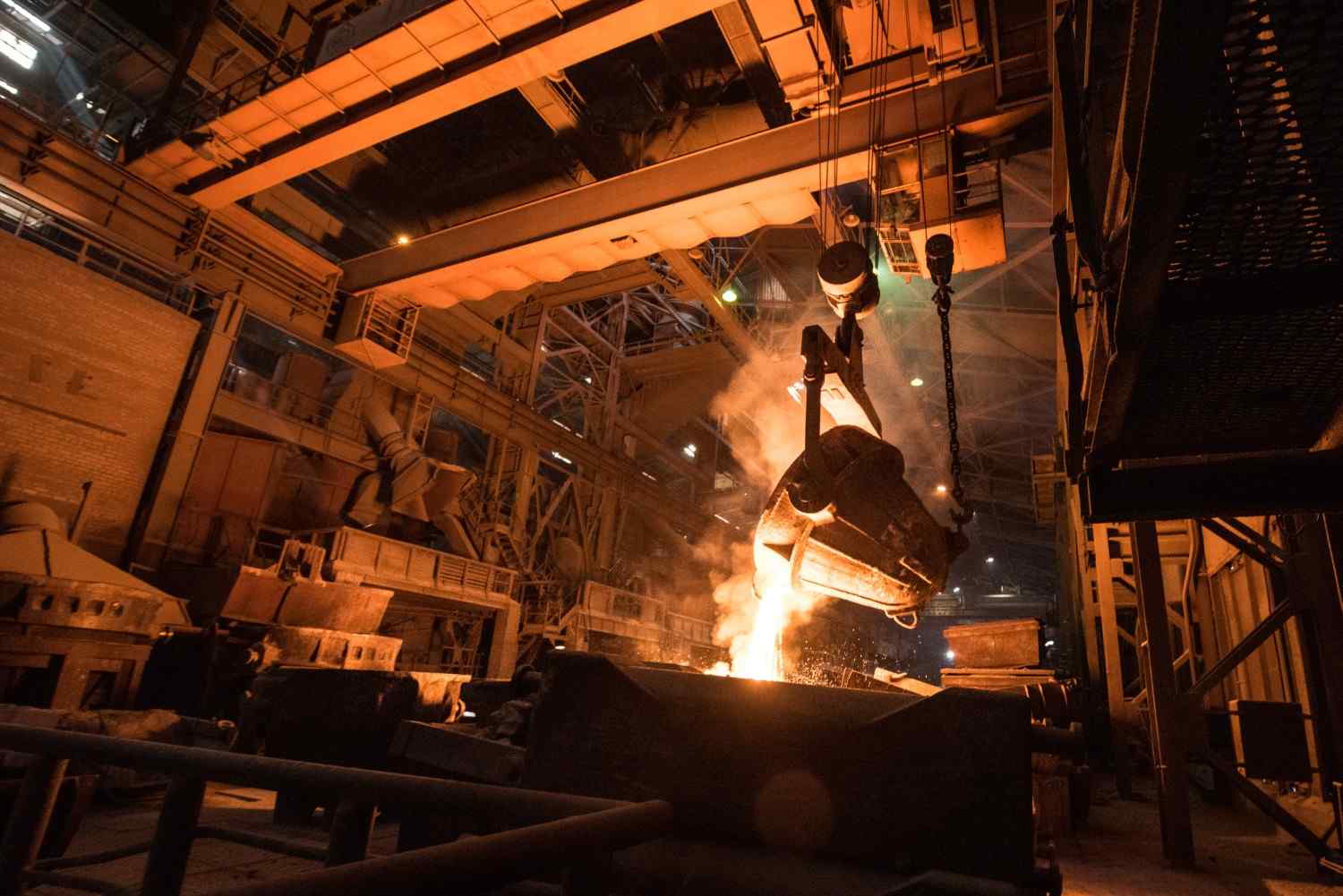
In the past decade, Indian foundries have dramatically changed but have remained somewhat quiet within the industry. Shop floors that relied heavily on the manual skill of workers now utilize sensors and software in conjunction with machines that are controlled. This shift has had a direct and significant impact on the quality of castings. Manufacturers that provide products for automotive, infrastructure, railways, and export markets no longer consider automated foundry systems as “nice to have”; they are now seen as “must-haves” in order for manufacturers to have a competitive edge.
As seen with Govind Steel, which produces for discerning customers who demand consistency and reliability, automation has changed the way that foundries in India design, manufacture, and inspect their castings.
Why quality consistency matters more in India Today?
Foundries in India operate under a variety of unique challenges. One of these is that climatic variations will have an impact on how fast something will cool down, therefore making it difficult to get stable manufacturing processes. In addition, customers who are global will demand that their products be manufactured with the same degree of quality and uniformity from batch to batch, rather than simply expecting to receive a single acceptable sample out of the whole batch. As is typical in India, even skilled manual processes have a tendency to not be able to provide the same level of accuracy at scale on a day-to-day basis.
Automated foundry systems will change this for manufacturers. Automation means that rather than relying on luck and individual judgment, the manufacturing process will be controlled in a systematic and repeatable manner. Therefore, quality is built into the manufacturing process rather than relying on inspection at the end of the process.
Defect reduction through controlled processes
Defects in castings, such as porosity, shrinkage, and inclusion, continue to impact foundry yields in India. Traditionally, foundries would identify these defects after casting had happened and would either rework or reject parts. The approach now taken with the automation process is to remove the issue before it causes any problem with yield.
Real-time monitoring of pouring temperatures and cooling profiles in the mold with system controls allows for an immediate response to be made if there are variations or unexpected changes in those parameters. The result of this form of control is a measurable improvement in first pass acceptance rates, particularly for complex component parts based on local projects located throughout eastern India.
Precision and repeatability at scale
Manual techniques can result in many variations, even though those doing the work are very experienced. Robotic molding, coating, and pouring systems produce the exact same results every time. These are key factors in high-volume, highly tolerant operations.
Repeatability is critical for credibility at a modern automotive/engineering foundry in Kolkata. Automated Foundry Systems allow for each casting produced to match the sample approved, not only as a cosmetic characteristic, but also as a geometrical and metallurgical characteristic. Precision-driven processes, such as those utilized by Govind Steel, assure that the specifications allow for little tolerance.
Quality Control is an ongoing process
In modern advanced foundries, quality control has evolved from just being the last step before shipment to now occurring concurrently with production. Automated Inspection equipment, such as 3D Scanning, Ultrasound Testing, and X-ray inspection, is being utilized by advanced foundries to minimize the chances of internal and surface defects being present in manufactured items the moment they are produced.
Through the use of Artificial Intelligence Vision Systems, Automated Inspection Tools can identify issues that the human eye may have missed due to fatigue from long shifts of work. Consequently, manufacturers are able to save on Material, Labour, and Energy Resources using this method. Using Automated Inspection, Indian manufacturers are able to produce consistent and reliable products under Indian Production Conditions, which are typically long Production Runs.
Government and Industry 4.0
Moreover, Automation Produces Data. Automating the Melting, Moulding, and Finishing Processes creates many different types of Sensors. The Sensors collect Data on the Temperature, Composition, and State of the Moulds.
By utilizing Artificial Intelligence and Machine Learning, manufacturers now have the capability to analyze the Patterns of Production between Batches and Shifts, as the data collected provides a Predictive Model of Quality over time. In switching from an experience-based decision-making process to one based upon Data and Evidence, Indian Manufacturers are redefining how they manage Risk and Dependability in their Foundries.
Simulation, digital twins, and zero-defect planning
The implementation of simulation software and the use of digital twin technology have evolved past being merely a testing phase into a usable reality. By simulating the flow of metal, the solidification process, and where stress is likely to occur before ever producing parts, engineers are able to identify and eliminate potential defects from a product digitally.
This is particularly critical for the aerospace, defence, and heavy-engineering industries. With the help of predictive simulation, large projects that are being undertaken in or around any Kolkata foundry have significant cost savings associated with trial part development and dramatically shorter product development cycles. Producing zero-defect castings has shifted from being a wishful goal to a planned end result.
Improved metallurgical integrity
Automation contributes to the improvement of the metallurgical integrity of metals by providing precise control over the speed and temperature when pouring. This precise control over how the molten metal flows into the mould affects the final physical properties of the metal and its internal microstructure as defined by the grain size of the metal. When using automated spectroscopy to ensure that the chemical composition of metals is consistently within specification limits, manufacturers have the ability to build long-term trust with their customers by knowing that they can confidently test each and every lot produced, once again confirming the integrity of the metallurgical bonding process.
Competing globally from Indian shop floors
Through the use of automation to eliminate variability in production, Indian foundries are being rebranded as manufacturers and not just as low-cost producers. The ability to achieve such strong consistency, to develop documentation for every product produced and to offer traceability for each product produced has resulted in many Indian foundries being positioned as precision partners with their customers.
With the proper equipment and Automated Foundry Systems, foundries in Kolkata have the ability to compete on the same level as established global manufacturers while maintaining India’s strengths as a manufacturing location.
Selecting the best automation option
Not all foundries will require total automation. Rather, they should upgrade their equipment based on their commissioning and quality inspection processes. They should increase their provision of process data over time. Their automation investments should correspond to the quality expectations of their customers and product mix.
Conclusion
Automation does not take away jobs; it assists people in doing their jobs more effectively with better tools. By investing in quality-oriented automation at this time, Indian buyers will be better positioned for a sustainable growth path in the future. If businesses are looking for a casting partner, speaking to knowledgeable and experienced teams who understand the Indian market, practical production requirements, and global expectations will provide valuable insights as they move forward with their next decision.
FAQs
Is Foundry Automation feasible for medium-sized Indian foundries?
Yes, Modular automation supports a step-wise approach to increasing your level of automation per volume, difficulty, and customer base.
Will implementing Foundry Automation decrease the need for skilled operators in India?
Foundry Automation will not eliminate the requirement for skilled workers but will shift their functions. Instead of direct production involvement, Operators will transition to roles related to monitoring, evaluating, and controlling the processing of castings.
How can a Foundry in Kolkata utilize Foundry Automation to meet international requirements for its castings?
Foundry Automation will guarantee that there will be repeatability and traceability, in addition to having documented quality control procedures that are consistent with placing your products in compliance with International standards.
Will the Indian Climate affect how Automated Foundry Systems operate?
Automated Foundry Systems, when designed correctly, should account for the variations in temperature and humidity experienced in India.